AP Chemistry Atomic Structure Made Simple (Finally!
Recovered historical Refresh Kid article. Original dates and context are retained; this version awaits editorial review.
Atomic structure might seem complicated, but understanding it is key to doing well in AP Chemistry. In this guide, we’ll explain the basics in a simple way. By the end, you’ll feel ready to handle atomic models, electron configurations, and periodic trends with confidence.
Table of Contents:
What Is Atomic Structure?
Key Parts of an Atom
Atomic Models and Theories
Electron Configurations Explained
Periodic Table Trends and Atomic Structure
Frequently Asked Questions
What Is Atomic Structure?
Atomic structure refers to how an atom is organized, including its nucleus (containing protons and neutrons) and surrounding electrons. Understanding atomic structure helps explain chemical reactions, bonding, and periodic trends in AP Chemistry.Explore More AP Chemistry Guides at Refresh Kid
[caption id="attachment_448" align="alignleft" width="300"] Understanding the Building Blocks of Matter: A Visual Guide to the AP Chemistry Atomic Structure[/caption]
Key Parts of an Atom
An atom has three main subatomic particles:
Subatomic Particle
Charge
Location
Mass (amu)
Proton
+1
Nucleus
1
Neutron
0
Nucleus
1
Electron
-1
Electron cloud/shell
~0
Atomic Models and Theories
Scientists developed several models to explain atomic structure.
1. Dalton’s Atomic Theory
Atoms are the smallest units of matter.
Atoms of the same element are identical.
2. Thomson’s Model (Plum Pudding Model)
Atoms have electrons embedded in a positive charge.
3. Rutherford’s Model
Discovered the nucleus through the gold foil experiment.
4. Bohr’s Model
Electrons move in specific orbits around the nucleus.
5. Modern Quantum Mechanical Model
Electrons exist in regions of probability called orbitals.
Electron Configurations Explained
Electron configurations describe where electrons are located around the nucleus.
How to Write Electron Configurations:
Use the Periodic Table as a Guide: Example: Oxygen (O) → 1s² 2s² 2p⁴
Electron Configuration Table:
Energy Level (n)
Sublevel
Max Electrons
1
s
2
2
s, p
8
3
s, p, d
18
4
s, p, d, f
32
Periodic Table Trends and Atomic Structure
The periodic table helps predict atomic behavior. Here are key trends:
Q: What is the most important part of atomic structure in AP Chemistry? A: Focus on electron configurations, periodic trends, and atomic models.Q: How can I easily remember atomic trends? A: Use mnemonic devices like "F is the Most Electronegative Element" to remember electronegativity trends.Q: Do I need to memorize electron configurations? A: Yes, especially for common elements like carbon, oxygen, and noble gases.By following this simplified guide on AP Chemistry Atomic Structure, you’ll better understand the key concepts and be ready to tackle any exam question with confidence. Happy studying!

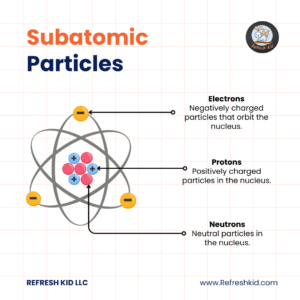 Understanding the Building Blocks of Matter: A Visual Guide to the AP Chemistry Atomic Structure[/caption]